History of the SEWA Movement
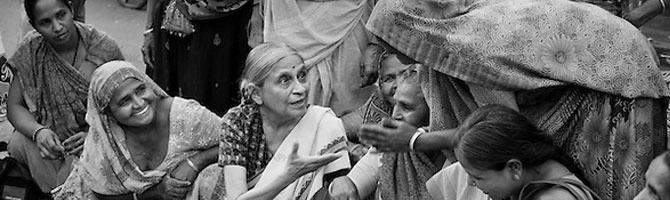
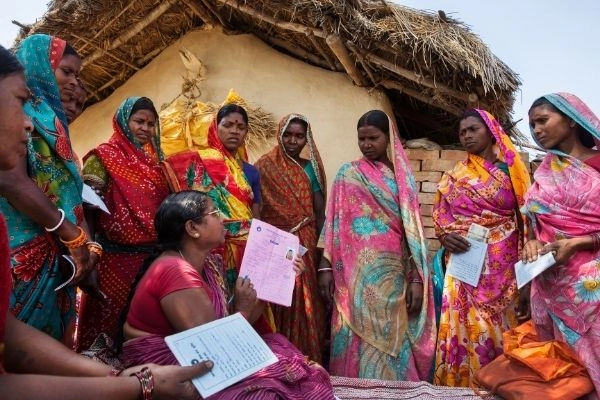
The Self Employed Women’s Association (SEWA) is a women’s trade union that was started by women workers in Gujarat under the guidance of Smt. Ela Bhatt in 1972. Originally born out of the Textile Labor Association (TLA), India’s oldest and largest union of textile workers, SEWA is now a globally recognised trade union of women workers in the informal economy. In order to secure economic, social, and legal rights for women workers, SEWA supports the formation of member-based organisations of poor working women. The first such organisation was the SEWA Bank, followed by diverse cooperatives and producer groups of women with livelihoods as artisans, milk producers, and farmers. Later on, women formed similar cooperatives around health and childcare.
After over 50 years, SEWA has expanded across the country and has become a multistate movement owned by women in the informal economy. Today, there are over 3.2 million SEWA members representing 18 states of India. SEWA Bharat’s member institutions help the movement reach out to vulnerable women working in the informal economy.
Eleven Point Approach
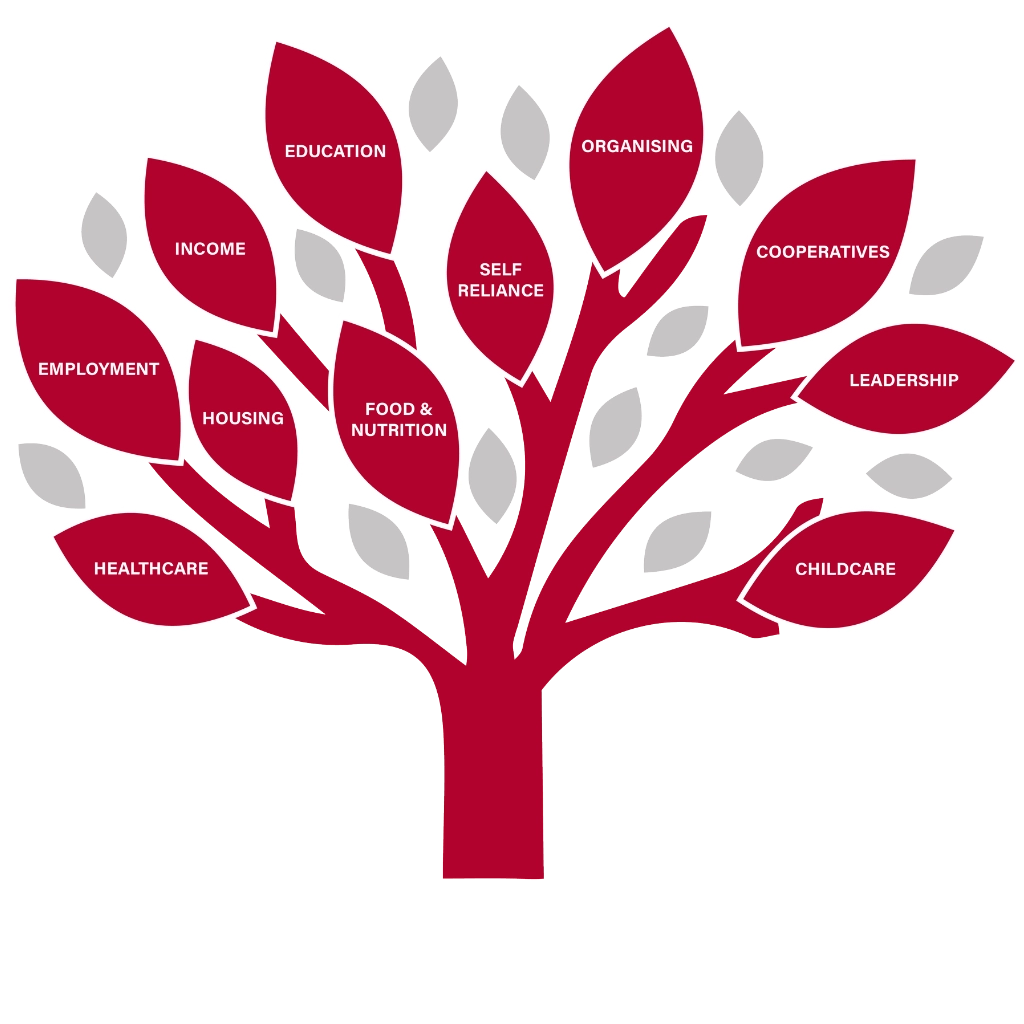
SEWA’s development programmes work together to address the systemic and chronic economic and social barriers that women in the informal economy face. SEWA’s holistic approach to development works towards ‘Eleven Points’. Once these eleven points are fully achieved, women will attain self-reliance and full employment.
Self-reliance yet again deals with equipping themselves with necessary skills and resources to be independent, rather self-dependent to attain a sense of security, both economically and socially.
SEWA’s eleven-point approach holistically deals with several aspects of social empowerment including the primary needs of food and nutrition, income, healthcare and housing, childcare which further expands to education and employment. Attaining these would, in turn, give opportunities to showcase leadership, and organizational skills while forming cooperatives thereby attaining self-reliance.
These eleven points serve as a chain reaction and help our women achieve the best of their potential thereby contributing towards their overall development.
SEWA’s commitments
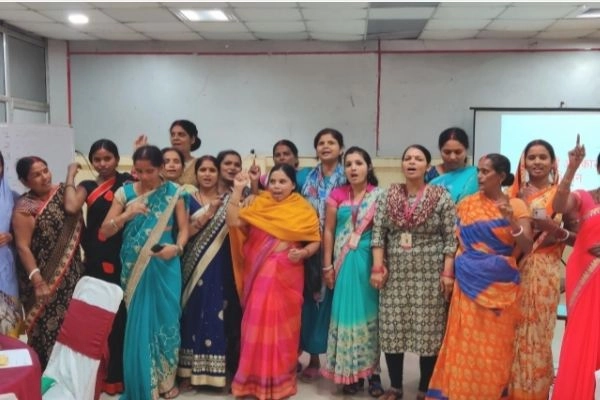
To strengthen women through establishing a common identity as informal workers
To keep women workers’ rights, needs, visions at the centre

To empower women as leaders of their own programmes